A VilavellaChapel of Santo Cristo
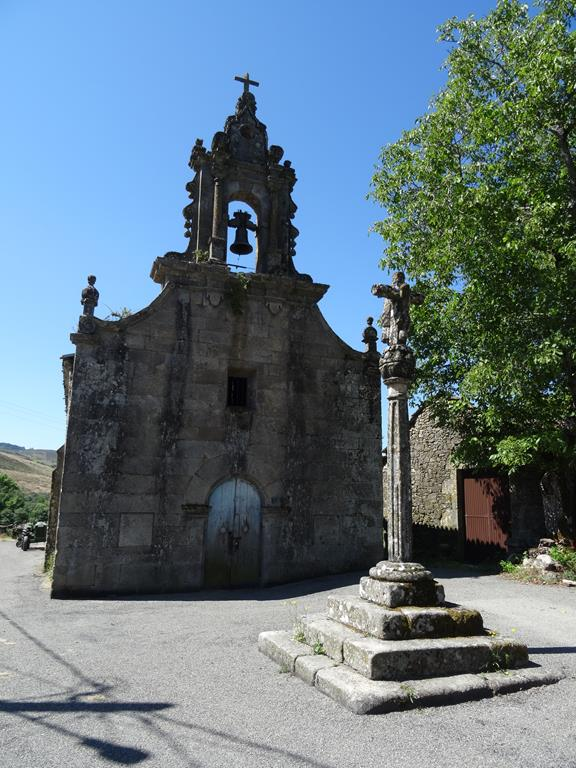
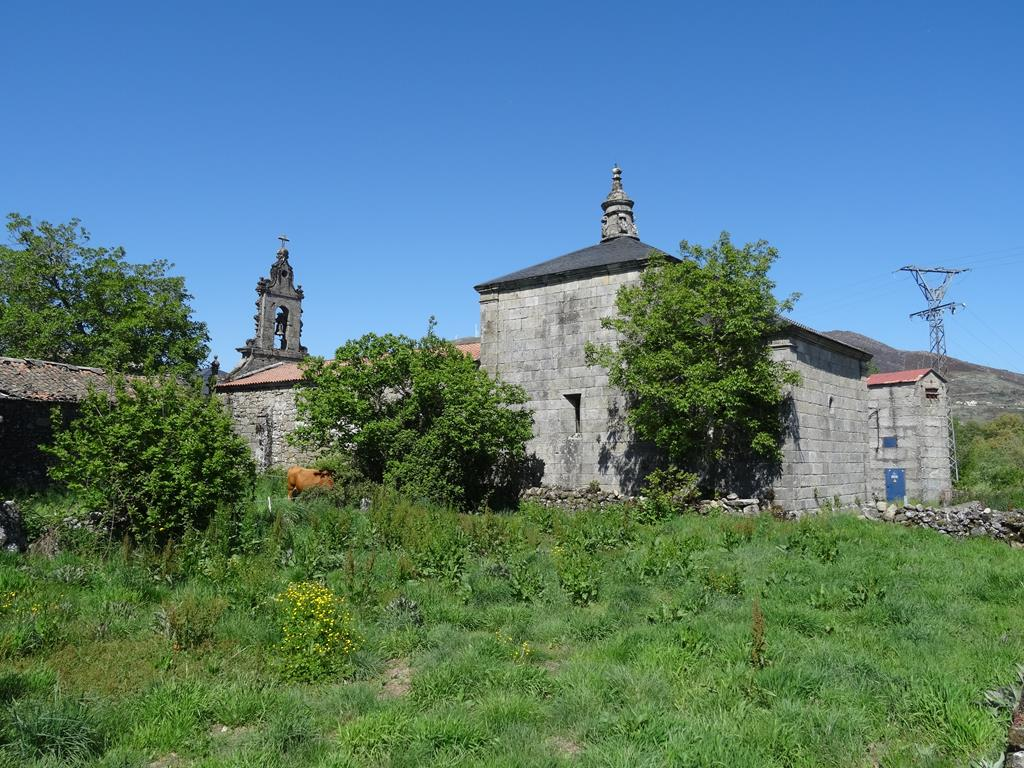
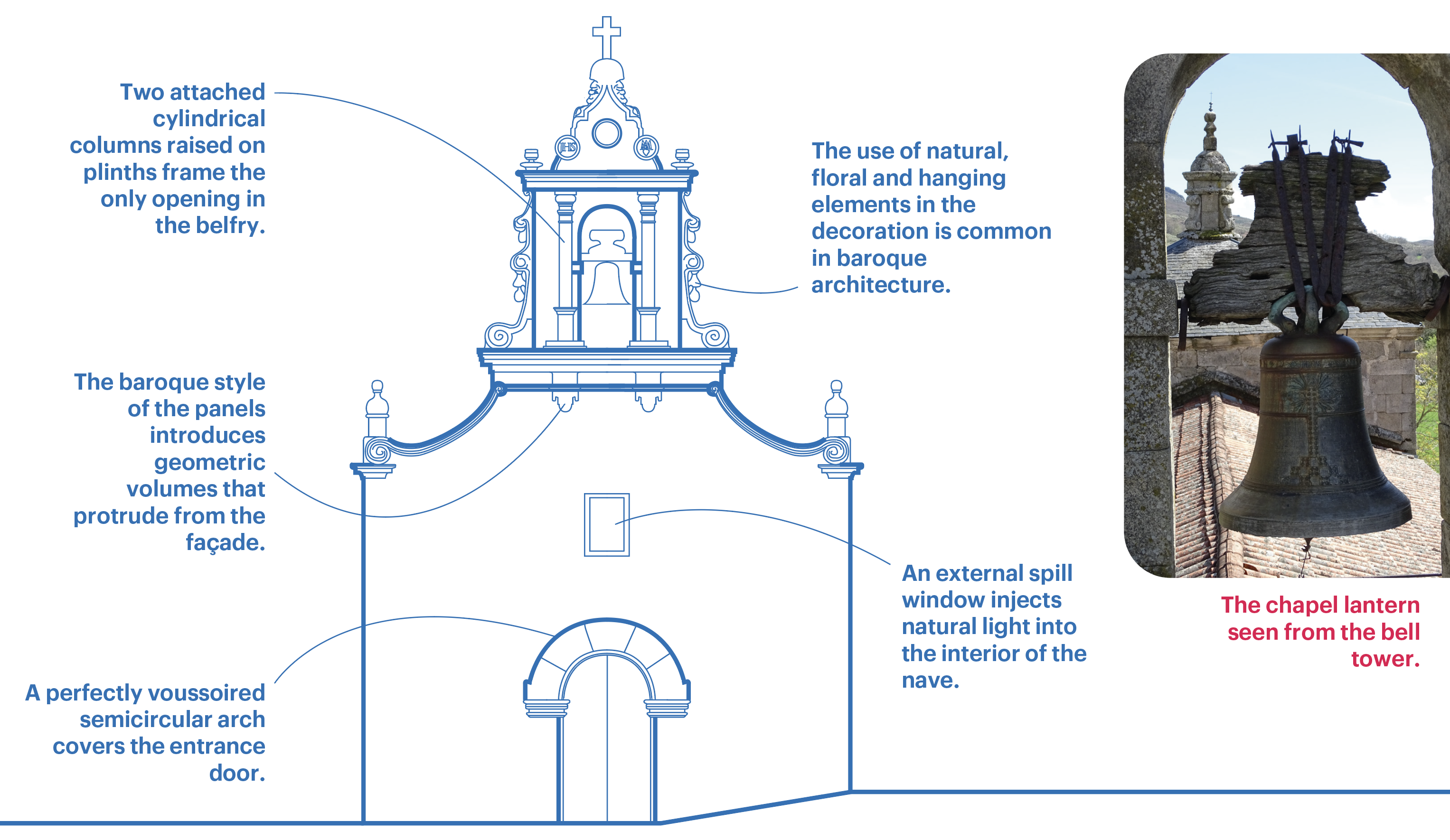
To the south of the church of Santa María de la Cabeza is the private chapel of Santo Cristo, a remarkable but absent-minded Baroque temple built in 1789 with an unusual north-south orientation, which had to be the object of a special dispensation from the ecclesiastical authorities. This exceptionality could be explained by the fact that its promoter was the judge of A Vilavella in 1759, as the inscription on the façade states:
THIS WAS DONE WHILE ANTONIO DOMINGO DIÉGUEZ Y APARICIO WAS JUDGE. YEAR 1759. YEAR 1759. HE M(La)RO SQUIRE.
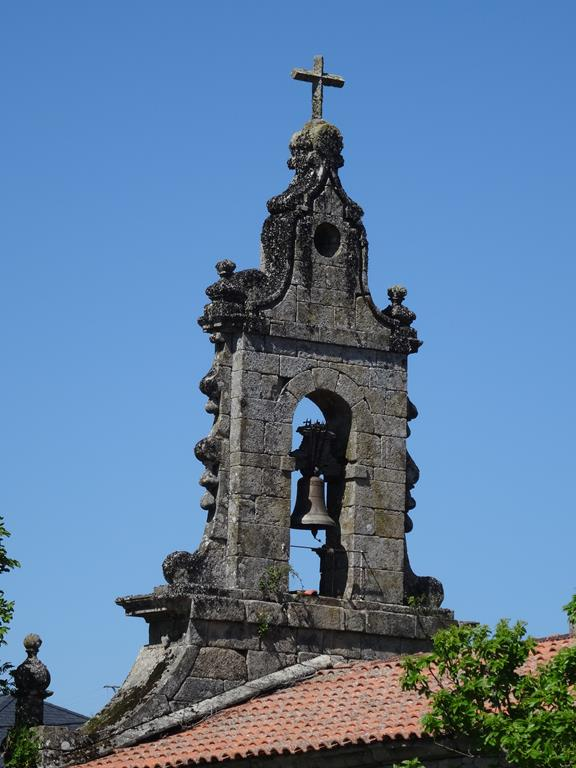
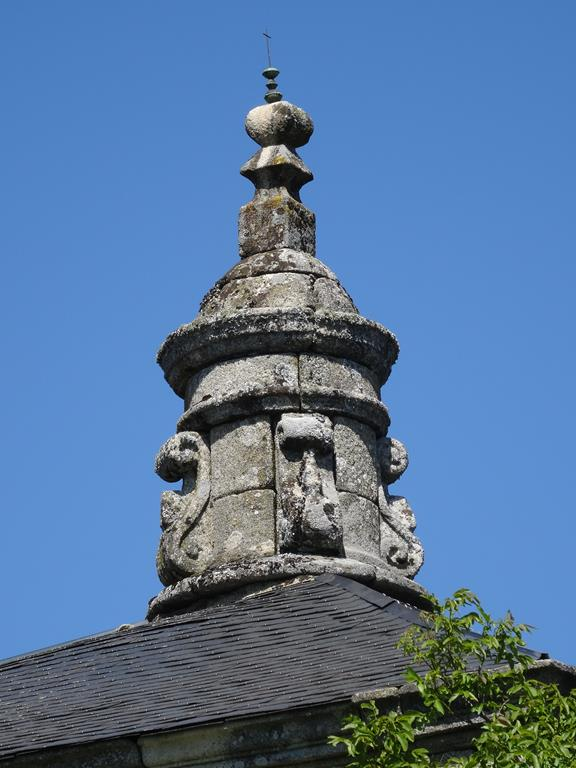
One of the most outstanding elements of this building is the bell tower, with a single opening, but richly decorated with a pair of free-standing Doric columns on a pedestal, plaques and plant motifs hanging from lateral scrolls. The elegant blind lantern that crowns the presbytery also stands out.
Unfortunately, the interior of the chapel is in a very poor state of conservation.
In the chapel's tower there is a large house with an overhanging balcony that may have belonged to the chapel's promoter. We know that in 1936, this house belonged to Colonel José García Cedrón. There is also a remarkable figurative transept that forms part of the ensemble.
Between 1701 and 1713 the War of Succession took place in the Crown of Spain, a dynastic conflict caused by the death without descendants of King Charles II (1660-1704).
The first years of the conflict were marked by the fear of an English attack along the Galician coast, which forced the Captain General of Galicia to forcibly recruit the necessary men in our kingdom. To avoid being enlisted, many of them tried to leave Galicia by posing as seasonal harvesters who went to Tierra de Campos. For this reason, the military authority prohibited "the march of the Galician people to Castile, placing guards from Quiroga to A Vilavella".