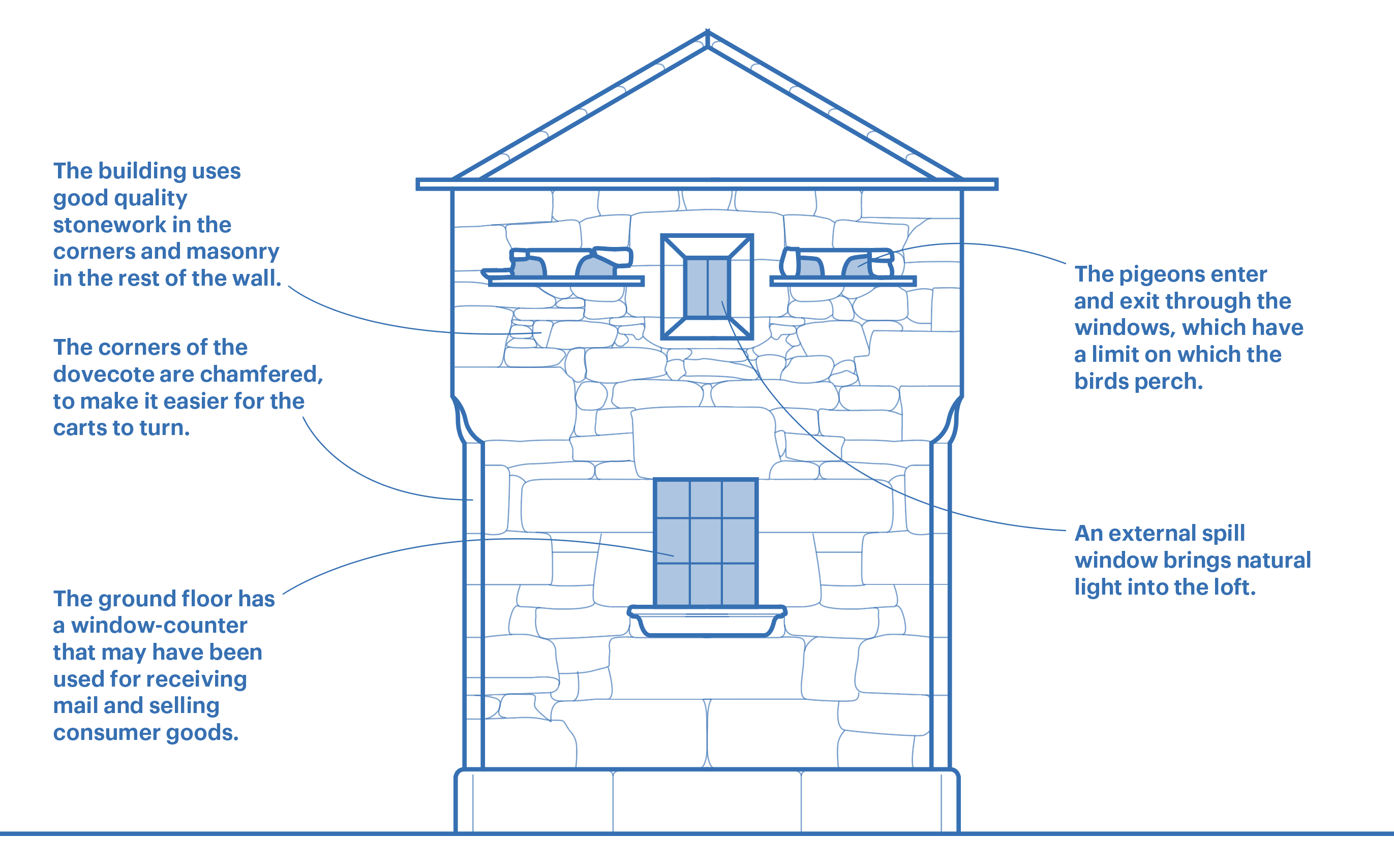
A VilavellaDovecote of O Cachón
Located in O Cachón neighbourhood, this is a dovecote (lat. palumbale) with a square floor plan in an unusual location, next to the street. Built in irregular stonework, the lower floor was a blacksmith's forge and is now used for domestic purposes, while the upper floor houses the stone niches in which the pigeons used to sleep and breed.
In rural Galicia it is not unusual to find houses with pigeons. The best known are the isolated dovecotes in pazos and large houses, but there are also other more modest houses with pombeiros in the attic or in a nearby adjective building, as is the case here.
Eating pigeons (lat. pipione, "que pía") or young pigeons was a delicacy, an exquisite dish for special feast days, enjoyed by the wealthiest families. Álvaro Cunqueiro, in his book A cociña galega (1973), writes: 'In Galicia pigeon must have been eaten for lunch a lot. Pazos and Priest´houses had dovecotes - "palomar y ciprés, pazo es", as the saying goes - and in the villages, more than two houses in each had pigeons".
A popular saying confirms the image of dovecotes as symbols of social distinction, as well as the restricted consumption of the pigeons that were bred in them: "The abbot's pigeons are kept by the neighbours and eaten by the abbot".